

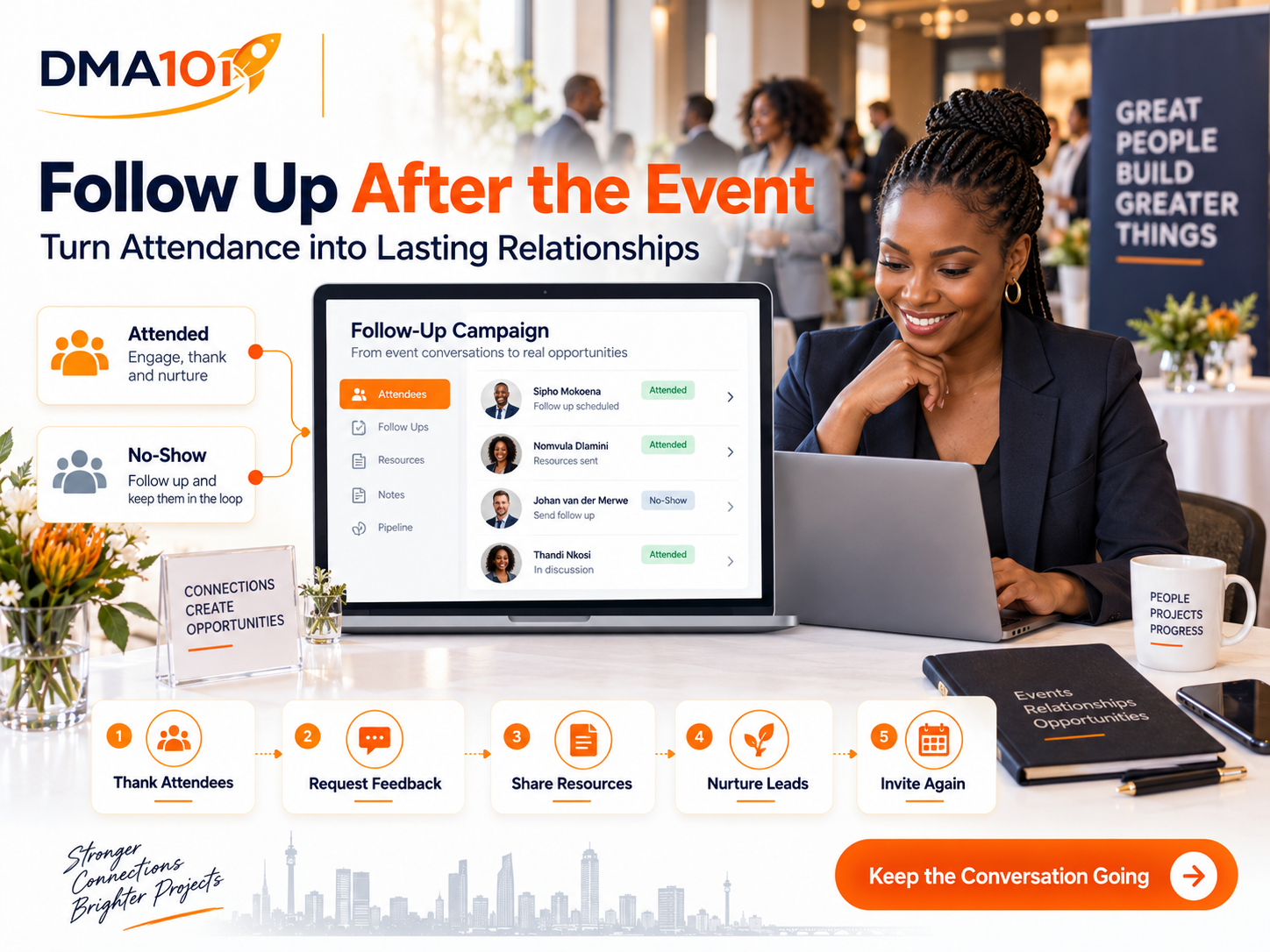
A successful event does not end when the final guest leaves.
The conversations, registrations and connections created during your event can continue producing value long afterwards. However, this only happens when you have a clear post-event follow-up process.
Without follow-up, interested attendees may forget what they learned, promising enquiries can become cold, and valuable feedback may never reach your team.
A well-planned event follow-up helps you strengthen relationships, gather insights, convert interest into action and encourage people to attend your future events.
Quick answer
Post-event follow-up means continuing the conversation with attendees after the event ends. A practical process separates attendees from no-shows, sends a prompt thank-you message, requests feedback within 24 to 48 hours, shares useful resources, gives every attendee a clear next step, and records all activity in one central system. Done well, follow-up turns a single event into lasting relationships, leads and repeat attendance.
Prepare your follow-up before the event, not after.
Why Post-Event Follow-Up Matters
Your attendees have already invested their time in your organisation. That makes the period immediately after the event an important opportunity to deepen the relationship.
Effective follow-up can help you:
The objective is not to send one generic email to everyone. It is to continue the conversation in a relevant and organised way.
Prepare Your Follow-Up Before the Event
Post-event communication should be planned before the event takes place.
Prepare your thank-you messages, feedback forms and resource pages in advance. Decide which team members will respond to enquiries and determine how attendees will be grouped after the event.
Your registration form can also collect information that supports more personalised follow-up. Depending on the event, this might include:
Collect only information that you genuinely need and explain how it will be used.
Separate Attendees From No-Shows
One of the most important steps is separating people who attended from those who registered but did not arrive.
These groups should receive different communication.
Someone who attended can be thanked for participating and sent the resources associated with the event. A person who missed the event may appreciate a recording, summary or invitation to a future session.
Sending an attendee a message saying, "Sorry we missed you," immediately makes the communication feel impersonal. Reliable attendance records help you avoid this mistake.
Segment Different Types of Participants
Attendance is only one way to organise your contacts. You may also need separate follow-up paths for:
A sponsor should not receive exactly the same message as a ticket holder. Likewise, a person who requested a consultation deserves a different next step from someone who simply attended an educational session.
Segmentation allows every group to receive communication that reflects its relationship with your organisation.
Send a Prompt Thank-You Message
Send your first message within a few hours of the event or by the following morning.
Keep it warm and concise. Thank the attendee for being present and remind them of the value or purpose of the event.
The message can also explain what will happen next, such as:
A prompt thank-you message shows professionalism and keeps your organisation fresh in the attendee's mind.
Ask for Feedback Within 24 to 48 Hours
Feedback is most useful while the event is still recent.
Send a short survey containing questions that will help you make practical improvements. Avoid asking so many questions that completing the survey feels like another assignment.
Useful questions include:
- 1How would you rate your overall experience?
- 2Which session did you find most valuable?
- 3Was the registration process easy to complete?
- 4How would you rate the venue or online experience?
- 5What could we improve?
- 6What topics would you like us to cover next?
- 7Would you attend another event organised by us?
- 8May we contact you about relevant services or future events?
Use a combination of rating questions and one or two open-ended questions.
Share Useful Event Resources
Your follow-up may include:
Organise these resources on one clearly labelled page whenever possible. This gives attendees a convenient destination instead of forcing them to search through several emails and attachments.
Do not overwhelm people with unrelated promotional material. Every resource should connect naturally to the event they attended.
Follow Up With No-Shows Respectfully
People miss events for many legitimate reasons. Transport challenges, work emergencies, illness or scheduling conflicts can prevent someone from attending.
Your no-show message should be helpful rather than judgemental.
You could say:
"We're sorry you couldn't join us. Here is a summary of what was covered, along with information about our next session."
Where appropriate, offer:
A considerate no-show sequence can recover interest without making the recipient feel guilty.
Give Attendees a Clear Next Step
Every event should lead somewhere.
The right next action will depend on your event and organisation. It might be:
Keep the next step clear and relevant. Too many competing calls to action can reduce response rates.
Nurture Leads Without Applying Pressure
Some attendees may be interested in your services but not ready to make an immediate decision.
A good nurturing sequence continues providing value. It should not become a stream of aggressive sales messages.
Follow-up content could include:
Whenever possible, base the communication on what the person expressed interest in.
Record Follow-Up Activity in One System
Follow-up becomes difficult when registrations are in one spreadsheet, attendance records are on paper and enquiries are stored in individual inboxes.
A central event management system can keep each participant's information and activity together.
Useful records may include:
This gives your team a clearer picture of every relationship and reduces the chance that an important enquiry will be forgotten.
Remember Speakers, Sponsors and Suppliers
Attendees are not the only people who deserve follow-up.
Thank your speakers, facilitators, suppliers, sponsors and volunteers. Share relevant photographs or outcomes and ask for their feedback.
Sponsor follow-up might include a report on agreed deliverables, attendee engagement and future partnership opportunities. Speakers may appreciate selected photographs, audience feedback and confirmation that their presentation materials were shared correctly.
Professional partner follow-up strengthens relationships and makes future collaboration easier.
A Practical Post-Event Follow-Up Timeline
A simple sequence might look like this:
Event Day
Send a short thank-you message and confirm when resources will be available.
One to Two Days Later
Send the feedback survey and provide access to event materials.
Three to Five Days Later
Follow up with attendees who requested information, meetings or quotations.
Seven Days Later
Share an additional useful resource or announce a relevant next step.
Two Weeks Later
Invite engaged contacts to another event, consultation or programme.
The exact timing should match the type of event and the expectations set during registration.
Mistakes to Avoid
Common post-event follow-up mistakes include:
- Sending the same message to everyone
- Waiting several weeks before making contact
- Treating no-shows as attendees
- Sending too many sales messages
- Sharing large, unorganised attachments
- Failing to respond to survey comments
- Collecting leads without assigning follow-up responsibility
- Contacting people without respecting their communication preferences
- Promising resources that are never delivered
Automation can improve consistency, but every message should still feel appropriate to the recipient.
Measure the Results of Your Follow-Up
Tracking results helps you improve future communication.
Consider monitoring:
Avoid judging success using only email opens. The most useful measurements are the actions that support your event's actual objectives.
Post-Event Follow-Up Checklist
Before closing your event project, confirm that you have:
- Updated attendance records
- Separated attendees from no-shows
- Sent thank-you messages
- Shared promised resources
- Requested feedback
- Responded to important comments
- Assigned sales or partnership enquiries
- Thanked speakers and sponsors
- Recorded follow-up activity
- Invited suitable contacts to the next step
- Reviewed results with your team
Turn Every Event Into a Lasting Opportunity
Events bring people together, but follow-up turns that moment into a relationship.
With the DMA101 Event Management System, your team can manage registrations, record attendance, organise contacts and coordinate relevant follow-up from one connected system.
Instead of allowing valuable conversations to disappear after the event, you can continue engaging attendees with timely messages, helpful resources and clear next steps.
Keep the conversation going with DMA101.
Keep the Conversation Going With DMA101
Stop letting valuable event conversations disappear. We will set up your complete events system so registrations, attendance, feedback and follow-up all run from one connected platform.
Start the Fit Check
Written by Digital Marketing Agency 101
Founder & Digital Growth Strategist at DMA101. Helping ambitious businesses build complete digital growth systems that convert.
Read more about our methodology →Have thoughts on this?
We'd love to hear your perspective. Join the conversation on LinkedIn or reach out directly.
Keep Reading
What Information Should You Collect on an Event Registration Form?
Learn exactly what information to collect on an event registration form, from essential contact details to dietary, accessibility and consent fields, without overwhelming attendees.
Read Article Events ManagementComplete Event Planning Checklist for South Africa
Use this practical event planning checklist to manage your South African event from strategy, budgeting and registration to operations and follow-up.
Read ArticleHow We Can Help
Basic Website Design (1-5 Pages)
Perfect for local businesses needing a clear, professional online presence. Includes home, about, services, and contact pages.
Explore ServicePremium Website Design (5-10 Pages)
Ideal for growing businesses. Includes advanced layouts, lead capture forms, service detail pages, and basic SEO.
Explore ServiceCorporate Website Design (10-25 Pages)
Comprehensive site for established companies. Includes custom integrations, advanced SEO, team directories, and resource centers.
Explore ServiceGet Growth Strategies in Your Inbox
Join other ambitious business owners receiving our best insights on websites, automation, and lead generation.
We respect your privacy. Unsubscribe at any time.
Ready to implement these strategies?
Partner with DMA101 to elevate your brand and build a premium digital presence.
Start the 60-Second Fit Check