

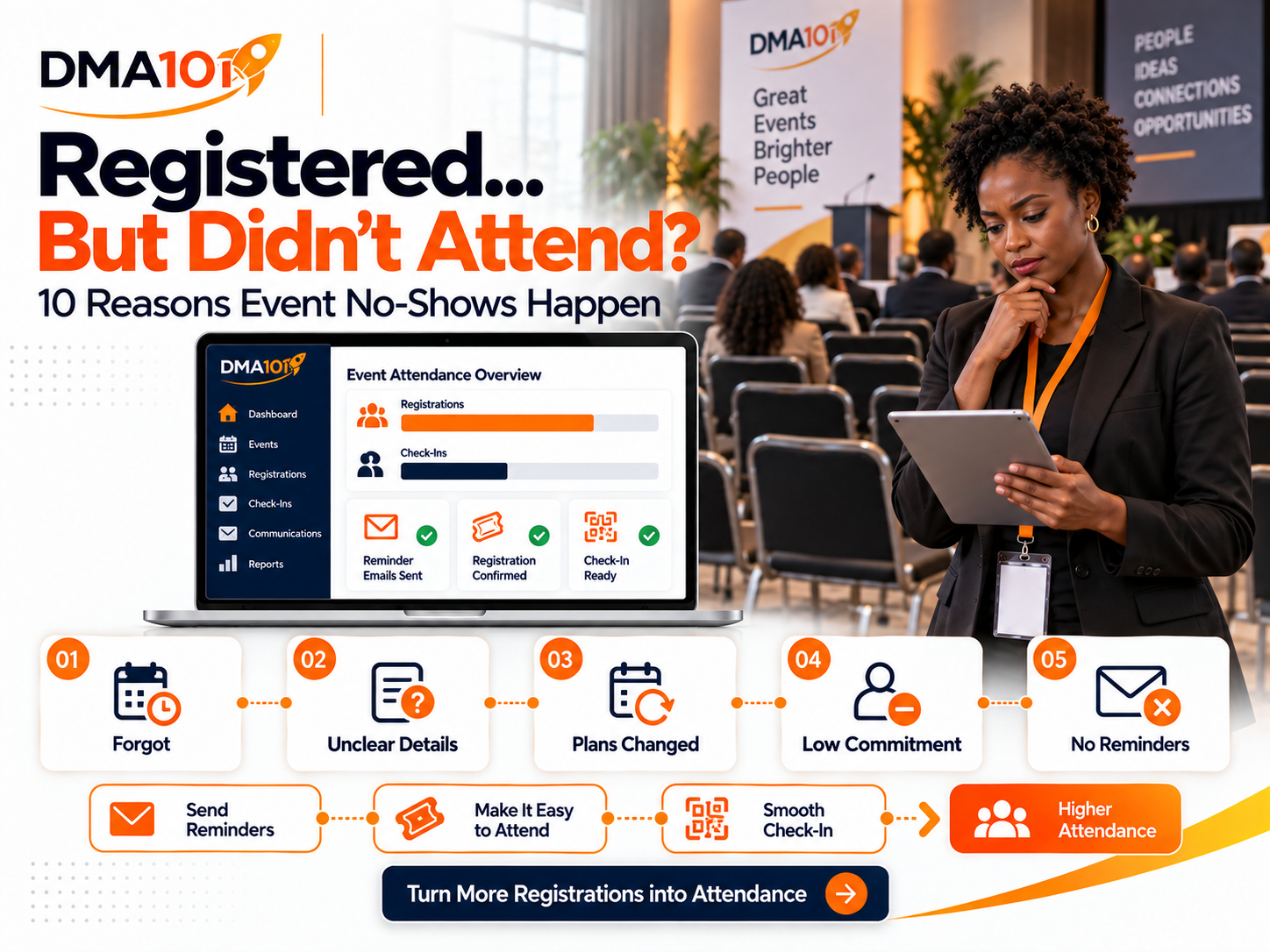
A large registration list can create the impression that an event will be full.
Then the event day arrives and several seats remain empty.
People who appeared interested enough to register don't attend, messages go unanswered and organisers are left wondering what went wrong.
Event no-shows are frustrating, but they aren't always caused by a lack of interest. People forget, plans change, instructions are unclear or the event no longer feels important enough to prioritise.
The good news is that many of these problems can be reduced through better communication, stronger registration processes and carefully planned automation.
Here are 10 common reasons people register for events but don't attend, together with practical ways to improve attendance.
Quick answer
Most event no-shows are caused by forgetfulness, unclear communication, weak commitment or registration problems, not a lack of interest. A structured reminder sequence, immediate confirmations, clear event information and a connected event management system can significantly reduce preventable no-shows.
No system eliminates every no-show. The goal is to reduce preventable absences and give organisers accurate attendance information.
1. They Simply Forgot
People are busy.
They may register while scrolling through social media, reading an email or responding to a WhatsApp message. At that moment, the event sounds valuable and they genuinely intend to attend.
As the days pass, work, family responsibilities and other commitments take over. If the event isn't added to their calendar and no reminders are sent, it can easily be forgotten.
This problem is especially common when people register several weeks or months before an event.
How to reduce it
Send a confirmation immediately after registration and follow it with reminders before the event.
A practical sequence could include:
- A confirmation after registration
- A reminder seven days before
- Another reminder three days before
- Final instructions one day before
- A short reminder a few hours before the event
Each message should repeat the event name, date, time and location. Online attendees should also receive clear access instructions.
2. The Event Was Free, So There Was No Financial Commitment
Free events can attract many registrations, but they often create a lower level of commitment.
Registering costs nothing, so people may reserve a place while they're still undecided. If another activity appears, they don't feel as though they're losing anything by missing the event.
This doesn't mean every event should charge an entry fee. Churches, NGOs, schools and community organisations may need to keep events free and accessible.
It does mean organisers should use other ways to build commitment.
How to reduce it
After someone registers, involve them in the event journey.
You could:
When people interact with the event before it begins, they're more likely to feel personally invested.
3. They Didn't Receive a Proper Confirmation
A registration form that ends with a generic "Thank you" message may leave the attendee uncertain.
They may not know whether the registration was successful, whether payment was received or what happens next.
If the person doesn't receive an email or SMS confirmation, they may assume the registration failed. They may also lose the event details and have no easy way to recover them.
How to reduce it
Send an immediate confirmation containing:
The attendee shouldn't need to contact the organiser to confirm whether they're registered.
4. The Event Information Was Unclear
People are less likely to attend when they're uncertain about where to go, when to arrive or what to expect.
Common information gaps include:
- An incomplete venue address
- No parking instructions
- No starting or finishing time
- No dress code where one is expected
- No explanation of what to bring
- No online joining link
- No contact person
- No programme or agenda
- Conflicting information across different platforms
Even a motivated attendee may decide that attending is too inconvenient if the instructions are confusing.
How to reduce it
Create one central event page containing the latest information. Use the same event details in confirmations, reminders, social posts and advertisements. If something changes, update the central page and notify registered attendees immediately.
A final instruction message should answer the practical questions an attendee is likely to ask before leaving home.
5. The Event No Longer Felt Valuable
Some people register because the event title catches their attention, but their interest fades when they don't see enough evidence of value.
If the organiser becomes silent after registration, the attendee may forget why the event originally appealed to them.
This is a marketing problem as much as it's an event management problem.
How to reduce it
Continue communicating the event's value after registration.
Share content such as:
Don't rely on the original advertisement to maintain interest until the event date.
6. The Registration Happened Too Far in Advance
Opening registrations early can help with planning and cash flow. However, a long gap between registration and the event creates more time for circumstances to change.
The attendee may change jobs, travel, become ill or commit to something else. They may also forget why they registered.
How to reduce it
Divide communication into stages.
For example:
After registration
Send confirmation and ticket information.
Several weeks before
Reintroduce the event's purpose and speakers.
Seven days before
Send the programme and practical information.
Three days before
Ask the attendee to confirm or cancel.
One day before
Send final arrival or access instructions.
This keeps the event active in the attendee's mind without sending unnecessary messages every day.
7. They Couldn't Easily Cancel or Transfer Their Place
Sometimes people know they won't be able to attend but have no clear way to inform the organiser.
They may not know who to contact, or cancelling may require a long email or phone call. It feels easier to say nothing.
This creates inaccurate attendance numbers and prevents the organiser from offering the space to someone else.
How to reduce it
Give attendees a clear cancellation process. The confirmation and reminder messages should explain what to do if their plans change.
For paid events, publish a clear refund and transfer policy before purchase. If self-service transfers aren't available, provide a contact person who can update the attendee information.
For events with limited capacity, consider using a waiting list so cancelled spaces can be offered to someone else.
8. The Timing or Location Became Inconvenient
People may register before fully considering travel time, transport, parking, working hours or family responsibilities.
South African organisers should also consider transport availability, safety, travelling distance and the cost of getting to the venue.
An event scheduled during working hours may be difficult for employed attendees. An evening event may raise transport or safety concerns.
How to reduce it
Before opening registrations, consider:
- The target audience's working hours
- Public transport availability
- Parking
- Venue accessibility
- Travel distance
- Load-shedding or connectivity risks
- Safety around arrival and departure times
- Whether an online option would help
- Whether the programme justifies the travel required
Give attendees enough information to make a realistic decision before they register.
9. The Attendee Experienced Registration or Payment Problems
A complicated registration process can create uncertainty even when the person appears on the attendee list.
They may have encountered:
- A payment that seemed unsuccessful
- A slow page
- A registration page that didn't work properly on mobile
- An error after submitting the form
- No receipt
- No confirmation message
- Confusing ticket options
- A discount code that didn't work
If the attendee isn't sure whether the registration was completed, they may abandon the process mentally even though some of their information was captured.
How to reduce it
Test the complete registration journey before promoting the event.
Test it on:
The organiser should also monitor incomplete or unsuccessful registrations and provide a quick way for people to request help.
10. There Was No Personal Connection
Automated systems make event management easier, but people still respond to human connection.
If every message feels cold and generic, attendees may see the event as just another item on their calendar.
This is particularly important for coaching events, church gatherings, community programmes, training sessions and networking organisations.
How to reduce it
Use automation to deliver communication consistently, but write messages in a warm, natural voice. Address attendees by name where possible. Explain why the event matters and what they can look forward to.
For smaller or high-value events, a personal message from the organiser can have a strong effect.
"We're looking forward to welcoming you on Friday. We've prepared a practical session that will help you leave with a clear plan. If your availability has changed, please let us know so we can assist you."
A message like this feels personal while still serving a practical purpose.
Not Every No-Show Can Be Prevented
Even with a strong system, some people will still miss the event.
Illness, emergencies, transport problems, work demands and unexpected family responsibilities can't always be controlled.
The goal isn't to eliminate every no-show. The goal is to reduce preventable no-shows and give the organiser more accurate attendance information.
A professional process should help organisers distinguish between:
- Confirmed attendees
- Cancelled registrations
- Refunded tickets
- Attendees who checked in
- Registered no-shows
- People on the waiting list
This information is useful when planning future events.
How an Event Management System Can Improve Attendance
A connected event management system can support attendance by:
- Sending instant registration confirmations
- Delivering personalised event information
- Scheduling email and SMS reminders
- Sending different messages to different ticket holders
- Asking attendees to reconfirm
- Tracking cancellations
- Keeping attendee information in one place
- Providing digital tickets
- Making venue check-in faster
- Recording who actually attended
- Following up differently with attendees and no-shows
The system can also alert the organising team when someone registers or checks in. This gives organisers better visibility while reducing repetitive administration.
Build a Better Reminder Sequence
A reminder should do more than say, "Don't forget."
Each message should have a purpose.
Registration confirmation
Confirm that the person is registered and provide the essential details.
Seven-day reminder
Reinforce the value of attending. Include the programme, speaker information or expected outcomes.
Three-day reminder
Provide practical information such as parking, what to bring, dress requirements and arrival time.
One-day reminder
Keep the message short and clear. Repeat the venue, time and important instructions.
Same-day reminder
Provide only the information needed to attend, such as directions, the QR-code ticket or online access link.
Post-event message
Thank attendees and send relevant resources. Send a different message to no-shows where appropriate.
Use Attendance Data to Improve Future Events
Don't delete or ignore the registration information after the event.
Compare:
Look for patterns.
Did people who registered early attend at a lower rate? Did VIP ticket holders attend more consistently? Did one reminder generate more responses? Did attendees from a particular campaign check in at a higher rate?
This information helps the organiser improve the next event.
Event Attendance Checklist
Before the event, confirm that:
- Every attendee received a confirmation
- Event details are consistent across all platforms
- Reminder messages are scheduled
- The venue address is complete
- Parking and arrival instructions are clear
- Online links have been tested
- Ticket and payment information is accurate
- Attendees know how to cancel
- Staff can access the current attendee list
- QR-code and manual check-in processes have been tested
- Follow-up messages are ready
Clear communication builds confidence. Confidence makes attendance more likely.
Reduce Event No-Shows With DMA101
Registrations are valuable, but attendance is what gives your event its real impact.
DMA101 can build a connected Event Management System that handles registration, ticketing, payments, confirmations, automated reminders, attendee tracking, QR-code check-in and post-event follow-up.
Whether you're organising a conference, workshop, training programme, church event, corporate function, fundraiser or networking session, we can create an attendee journey that keeps people informed and engaged.
Turn more registrations into real attendance.
Plan Your Event With DMA101
Stop losing attendees to forgettable communication and weak follow-up. We will set up your complete events system so attendees stay informed, engaged and present from registration to revenue.
Start the Fit Check
Written by Digital Marketing Agency 101
Founder & Digital Growth Strategist at DMA101. Helping ambitious businesses build complete digital growth systems that convert.
Read more about our methodology →Have thoughts on this?
We'd love to hear your perspective. Join the conversation on LinkedIn or reach out directly.
Keep Reading
What Information Should You Collect on an Event Registration Form?
Learn exactly what information to collect on an event registration form, from essential contact details to dietary, accessibility and consent fields, without overwhelming attendees.
Read Article Events ManagementHow to Follow Up With Attendees After an Event
Learn how to follow up with attendees after an event, send thank-you messages, collect feedback, share resources and nurture leads with one connected system.
Read ArticleHow We Can Help
Basic Website Design (1-5 Pages)
Perfect for local businesses needing a clear, professional online presence. Includes home, about, services, and contact pages.
Explore ServicePremium Website Design (5-10 Pages)
Ideal for growing businesses. Includes advanced layouts, lead capture forms, service detail pages, and basic SEO.
Explore ServiceCorporate Website Design (10-25 Pages)
Comprehensive site for established companies. Includes custom integrations, advanced SEO, team directories, and resource centers.
Explore ServiceGet Growth Strategies in Your Inbox
Join other ambitious business owners receiving our best insights on websites, automation, and lead generation.
We respect your privacy. Unsubscribe at any time.
Ready to implement these strategies?
Partner with DMA101 to elevate your brand and build a premium digital presence.
Start the 60-Second Fit Check